2026 Top Tips: How to Store Electronic Beauty Devices? Proper storage protects expensive tools from moisture, heat, dust, and accidental damage. It also supports safer, more consistent beauty routines. This guide explains how to store electronic beauty instruments to prolong their lifespan, based on practical device-care principles and dermatology guidance.
Dr. Joshua Zeichner, a board-certified dermatologist, emphasizes: “Follow the manufacturer’s instructions, and keep beauty devices clean and dry.” This advice sounds simple. It matters every day. Wipe a facial cleansing device after use, then let it dry completely before placing it inside a case. Keep LED masks, microcurrent tools, and cleansing brushes away from steamy bathroom shelves. A cool bedroom drawer is usually safer. Avoid direct sunlight, radiators, and damp countertops.
Store each device with its charger, but do not wrap cables tightly around the handle. Loose loops reduce stress near the plug. Remove detachable batteries when the manufacturer recommends it. Check charging ports for residue, cracked casings, or unusual heat. Stop using damaged equipment until a qualified service professional checks it.
Many storage mistakes seem harmless. They are not always harmless. I have seen people leave devices beside sinks because access feels convenient. Convenience can shorten a device’s working life. Still, not every tool follows identical rules. Some need charging before storage; others require partial battery levels. Read the manual, even when the instructions seem obvious. A clean case, dry surface, and gentle routine can prevent expensive replacements and preserve reliable performance.
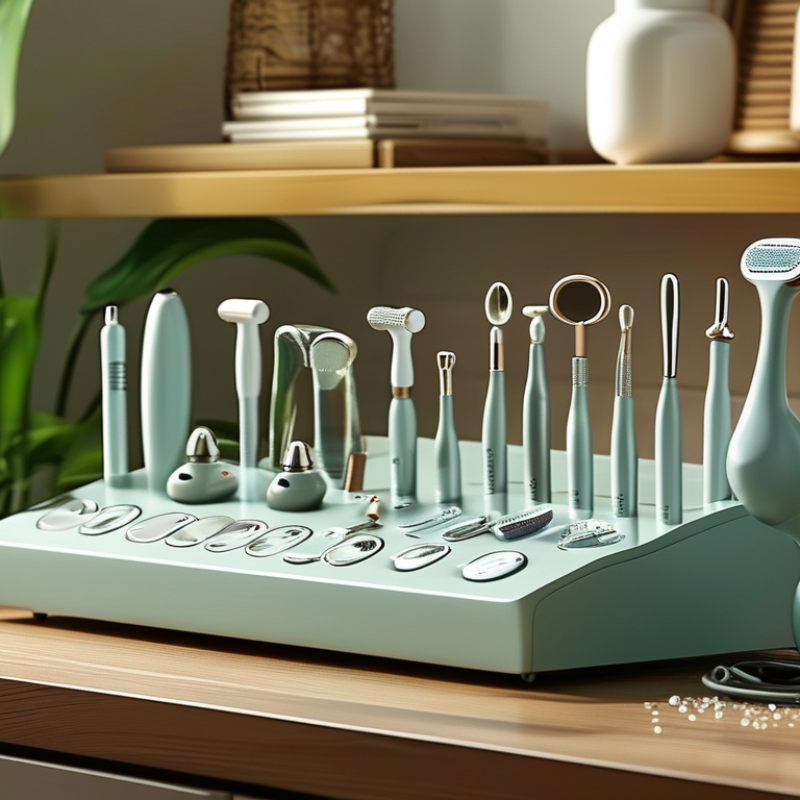
Before storing an electronic beauty device, assess its condition, battery, and charging accessories. Look closely. Check for swelling, cracks, loose cables, unusual heat, or a chemical smell. Never store a device that becomes hot during normal charging.
The National Fire Protection Association reported that electrical distribution and lighting equipment appeared in about 23% of U.S. home structure fires from 2016 to 2020. Beauty devices are smaller, but their charging risks still deserve attention.
Clean the device with a manufacturer-approved method, then dry every surface completely. Inspect the charging port for moisture, residue, or bent contacts. A rechargeable lithium battery should remain partly charged, ideally around 30% to 60%, rather than fully empty. Keep it away from direct sunlight, bathrooms, heaters, and metal objects.
The International Energy Agency noted in its Global Critical Minerals Outlook 2024 that lithium-ion battery demand continues rising across consumer electronics. This makes battery care more relevant, not less.
Store removable attachments separately in a cool, dry drawer. Avoid sealed plastic bags if condensation may form. Test the device briefly before long-term storage, but this step is easy to forget. I sometimes overestimate how clean a device looks. A dry cloth can miss product buildup around seams.
Record the storage date and inspect the device every few months. If swelling or heat appears, stop using it and seek qualified disposal guidance.
How to Clean and Dry Beauty Devices Safely
Beauty devices now sit in a fast-growing wellness market. The Global Wellness Institute valued the global wellness economy at $6.3 trillion in 2023. More devices also mean more overlooked hygiene risks. I have found that residue hides around charging ports, silicone edges, and rotating heads. Those areas need deliberate cleaning.
Unplug the device before cleaning. Remove detachable parts and follow the manufacturer’s care instructions. The CDC states that cleaning must happen before disinfection because dirt reduces disinfectant effectiveness. Use a soft, lint-free cloth with mild soap and water for washable surfaces. Never soak electrical parts. A cotton swab can lift residue from seams, but it may leave fibers behind. That detail is easy to miss.
Use a compatible disinfectant only when the instructions allow it. The CDC recommends alcohol-based hand sanitizer with at least 60% alcohol when soap and water are unavailable, but sanitizer is not automatically suitable for devices. Do not spray liquid directly into openings. Wipe carefully, then dry every surface completely. Store the device in a clean, ventilated drawer, away from damp bathrooms. A 2023 professional hygiene review found that moisture supports microbial survival on frequently touched surfaces. I sometimes rush the drying step, and that is the habit worth challenging. Wait until the device feels fully dry, not merely less wet.
Most facial brushes, trimmers, and light therapy tools use rechargeable lithium-ion batteries. Remove the battery only when the device allows it safely. Never pry open a sealed housing. Stop charging if the casing becomes swollen, unusually hot, cracked, or wet. A damaged battery is not a minor inconvenience.
Charge on a hard, dry surface away from bedding, curtains, and direct sunlight. Use the supplied or technically compatible charger. Do not charge a cold, wet, or visibly damaged device.
After charging, disconnect it instead of leaving it plugged in for days. For storage lasting several months, keep the battery around 40–60% charge. Store it in a cool, dry drawer, with metal contacts protected from keys and coins. Not perfect, but safer.
For removable alkaline or rechargeable cells, take them out before long-term storage. This reduces leakage and contact corrosion. Keep loose batteries separate, and never mix old and new cells.
The U.S. Fire Administration identifies overheating, swelling, damage, and improper charging as lithium-ion battery warning signs.
The Global E-waste Monitor 2024 reports 62 billion kilograms of electronic waste in 2022, while only 22.3% was formally collected and recycled.
Do not place batteries in household waste. Use an approved collection point.
I still see people storing devices fully charged in humid bathroom cabinets; convenience wins, but the habit deserves reconsideration.
Electronic beauty devices last longer when their storage area is planned, not improvised. After cleaning, place each device in a dry drawer away from sinks, steam, and direct sunlight. Bathrooms are convenient, but daily humidity can affect charging ports, seals, and removable heads. A bedroom drawer or dressing table cabinet is often safer. Use a ventilated case for devices that retain warmth after use. Let them cool completely first.
Keep charging cables loosely coiled, never tightly wrapped around the device. Store attachments in labeled pouches or shallow compartments, so clean parts do not touch dusty surfaces. Separate facial tools, hair accessories, and replacement heads. Small silicone trays can stop pieces from sliding behind drawers. Keep adapters together, but avoid overcrowding the compartment. Airflow matters more than perfect appearance.
In practice, I check every device before storing it. I look for moisture, loose parts, unusual heat, or damaged cables. I once placed a warm tool into a closed pouch and noticed condensation later. That mistake changed my routine. Now I wipe surfaces, wait several minutes, and store each item separately. I also keep a simple use-and-cleaning note inside the drawer. It is not elegant, but it prevents forgotten maintenance. If an instruction manual recommends a specific storage position, follow it instead of relying on memory.
How to Inspect and Maintain Stored Electronic Beauty Devices Over Time
Storage is not the end of maintenance. Inspect each device every three months, even when unused. Look for swelling, cracked housings, loose charging ports, corrosion, or a sharp chemical smell. These signs require immediate isolation from flammable materials. Do not recharge a damaged battery. A cool, dry cabinet is safer than a humid bathroom shelf.
Battery condition deserves special attention. Keep rechargeable devices partly charged, usually between 30% and 60%, unless the manufacturer specifies otherwise. Check cables for flattened sections and exposed wires. Clean contacts with a dry, lint-free cloth. Never spray liquid into vents, switches, or charging sockets. The European Commission’s Safety Gate 2023 report recorded 3,412 product alerts, highlighting why routine checks matter across electrical product categories. That figure does not prove every stored beauty device is dangerous. It does show that small defects should not be dismissed.
Review storage records twice yearly. Note the inspection date, battery condition, and any unusual heat during charging. Test the device briefly in a clear area, not on fabric or near water. I used to check only visible damage, which was not enough; charging behavior revealed problems earlier. Replace missing safety labels and keep instructions nearby. If a device has been stored for years, professional electrical testing may be wiser than a quick home trial. Temperature readings can help, but inexpensive meters are not always accurate. That limitation deserves attention.
| Device Category | Recommended Storage Conditions | Preparation Before Storage | Inspection Interval | Key Maintenance Checks | Replace or Service If |
|---|---|---|---|---|---|
| LED Light Therapy Devices | Clean, dry, dust-free area; approximately 15–30°C; avoid direct sunlight and moisture. | Disconnect power, wipe the surface with a soft slightly damp cloth, and allow it to dry completely. | Every 3 months | Check LEDs for uneven illumination, inspect the cable and connector, and remove dust from ventilation openings. | Cracked housing, exposed wiring, flickering light, overheating, or a damaged power adapter is found. |
| Microcurrent and Electrical Facial Devices | Store indoors in a dry location away from sinks, high humidity, heat sources, and metal objects. | Remove conductive gel residue, dry the contact surfaces, switch the device off, and remove disposable batteries if applicable. | Every 1–3 months | Inspect metal contacts, charging ports, buttons, battery compartment, and cable insulation. | Contacts corrode, the device delivers irregular pulses, the battery swells, or the casing becomes unusually hot. |
| Facial Cleansing Brushes | Keep the device upright or in a ventilated container; do not store it while wet or inside an airtight case. | Rinse only according to the device instructions, remove cleanser residue, and dry the brush head and charging contacts. | Monthly | Check bristles or silicone surfaces, charging contacts, seals, and vibration performance. | Brush material deteriorates, unpleasant odor remains after cleaning, seals loosen, or charging becomes unreliable. |
| Facial Steamers | Store completely dry in a cool, ventilated cabinet; protect the water tank from dust and impact. | Empty and rinse the tank, remove mineral deposits according to the instructions, and dry all internal and external surfaces. | Every 1–2 months | Inspect the tank, nozzle, seals, power cord, and steam outlet for residue, cracks, or blockage. | Water leaks, steam output is irregular, the tank is cracked, or a burning smell occurs. |
| High-Frequency Facial Devices | Keep in a dry, dust-free cabinet away from flammable liquids, strong magnetic fields, and excessive heat. | Clean and disinfect reusable electrodes as directed, dry them fully, and disconnect the electrode from the handle. | Every 3 months | Check the electrode for chips or cloudiness, inspect the handle, cable, controls, and output stability. | The electrode is cracked, arcing is uncontrolled, controls malfunction, or insulation is damaged. |
| Hair Removal Devices | Store in a dry room-temperature environment, protected from dust, impact, direct sunlight, and high humidity. | Clean the treatment window with a soft dry or manufacturer-approved cloth and disconnect the adapter. | Every 3 months | Inspect the treatment window, ventilation openings, cable, adapter, and startup indicators. | The treatment window is cracked, light output is inconsistent, the unit overheats, or the adapter is damaged. |
| Electric Shavers and Trimmers | Store dry and ventilated; use a protective cap or case only after the blades and device are fully dry. | Remove hair and cosmetic residue, clean the cutting head, dry the blades, and apply approved lubricant if required. | Monthly | Check blade alignment, corrosion, battery condition, charging port, and motor noise. | Blades pull hair, rust is visible, the battery swells, or abnormal vibration and noise develop. |
| Rechargeable Devices with Lithium-Ion Batteries | Keep away from heat, water, and direct sunlight; avoid freezing conditions and prolonged storage at full charge. | Switch off, disconnect the charger, and store at a moderate partial charge when the instructions allow it. | Every 2–3 months | Check for swelling, leakage, unusual odor, charging performance, and damage to the battery housing. | The battery swells, leaks, becomes hot while idle, emits an odor, or loses charge unusually fast. |
| Cables, Chargers, and Accessories | Keep loosely coiled in a dry organizer; avoid tight bends, heavy objects, and contact with liquids. | Clean connectors gently, separate cables from wet accessories, and label compatible charging equipment if needed. | Every 3 months | Inspect insulation, plug pins, connector fit, fraying, discoloration, and signs of heat damage. | Conductors are exposed, pins are bent or discolored, the cable becomes hot, or charging cuts in and out. |
: Remove it only if the device is designed for safe battery removal. Never pry open a sealed casing. Stop immediately if the casing swells, cracks, or becomes unusually hot.
Use a hard, dry surface away from bedding, curtains, sinks, and sunlight. Keep it visible while charging. Do not charge a cold, wet, or damaged device.
No. Disconnect it after charging instead of leaving it plugged in for days. Use the supplied or technically compatible charger.
Keep the battery partly charged, usually around 40–60%. Store the device in a cool, dry drawer. Protect metal contacts from keys and coins.
Remove removable cells before long storage. This helps reduce leakage and contact corrosion. Keep loose batteries separate. Never mix old and new cells.
It is convenient, but daily humidity can affect ports, seals, and attachments. A bedroom drawer or dry cabinet is often safer. My bathroom habit needed reconsideration.
Store clean attachments in labeled pouches or shallow compartments. Coil cables loosely. Keep adapters together, but avoid overcrowding. Airflow matters more than appearance.
Inspect each device every three months. Check for swelling, cracks, corrosion, loose ports, exposed wires, or chemical smells. Small defects deserve attention.
Wipe it with a dry, lint-free cloth. Let it reach room temperature. Test it briefly on a clear, dry surface away from fabric and water.
Do not recharge or place it in household waste. Keep it away from flammable materials. Use an approved battery collection point. Disposal rules vary by location.
Proper storage is essential for keeping electronic beauty devices safe, clean, and functional. Before putting them away, assess each device for cracks, loose parts, unusual odors, or signs of moisture. Clean the surfaces according to the device’s design, avoid immersing electrical components, and allow everything to dry completely. Remove detachable batteries when appropriate, charge rechargeable units to a suitable level, and store batteries separately in a cool, dry place away from metal objects and heat sources.
To learn how to store electronic beauty instruments to prolong their lifespan, organize devices and accessories in a dry, dust-free location with enough space to prevent pressure, tangling, or accidental drops. Keep cords loosely coiled and store attachments with their corresponding devices. Periodically inspect stored equipment for corrosion, dust buildup, battery swelling, or reduced performance, and recharge or maintain items as recommended in their instructions. These simple habits can help preserve hygiene, safety, and reliable operation over time.

Luminor Beauty